Stop Making Up Your Community’s Numbers
Make-believe numbers fall apart the moment a CFO asks how you got them. Mark Birch joins Chris and Marius on bridge metrics, measuring for the whole business, and the one metric to retire.

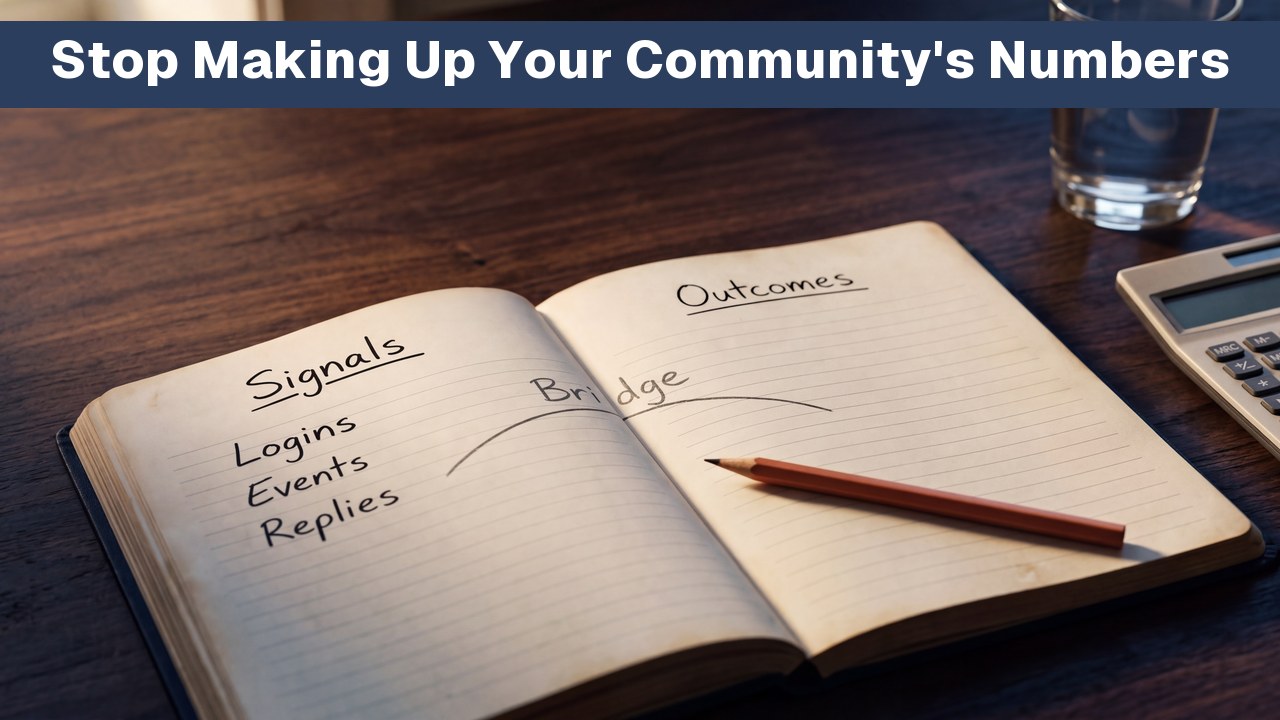
Ask Mark Birch which community metric everyone should retire, and he doesn’t hesitate: drop the proxy metrics.
Community ROI has never been short of numbers. It has been short of numbers anyone can check. A figure picked to make the totals work falls apart the first time a CFO asks how you got it.
In Episode 004, Mark, author of Community in a Box and Mark who founded TribeROI, joins Chris and Marius Ciortea on what to measure instead. AI can build the dashboard in an afternoon now. Proving what your community is worth still takes math you can check and conversations with the people you serve.
A few ideas worth taking into your next stakeholder meeting:
- Bridge the signals to the outcomes. Mark’s model has three layers: C3 is community signals, C1 is the business outcomes your executives already track, and C2, the bridge metrics, translates one into the other.
- Measure for the whole business, not your org chart. A community tied only to the department it reports to misses what it does for support, sales and product.
- Show your math. A health score built on plain, visible calculation can be checked. An AI-generated dashboard often can’t.
- Keep the people connecting human. AI can build your tools and draft the email to members who are drifting. Relying on it to connect people is, in Mark’s words, a very poor decision.
And a place to start from Marius: everything starts with the login. Divide daily active users by monthly active users and you have a barometer for how often the people who show up come back.
Watch or listen to Episode 004 →
Chapters, links and the full transcript are on the episode page.